





Ameet Kotecha: When Is It Time for a Care Home? An Honest Guide
By Ameet Kotecha , Founder, Boutique Care Homes

If you’re reading this, you’re probably asking yourself a question you never thought you’d have to ask: Is it time?
Maybe you’ve noticed your mum struggling more at home. Maybe your dad’s had a fall. Maybe you’re exhausted from trying to balance everything, and you’re wondering whether there’s a better way.
This is no doubt a hugely emotional time. The decision to consider residential care is one of the hardest things families face. I’ve met with hundreds of people who have navigated this exact moment, and I want you to know: whatever you’re feeling right now, guilt, worry, uncertainty, even relief, it’s okay to feel that way.
Let me share what I’ve learned from those conversations, in the hope it helps you find some clarity.
There’s No Perfect Moment
I’ve seen families wait for a clear sign, something definitive that tells them “now is the time.” But it rarely works that way.
More often, it’s a gradual realisation. Small things that add up. Mum forgetting to eat. Dad seeming lonelier. You are noticing they’re not quite themselves anymore. The care needs slowly outgrowing what you or they can manage alone.
It’s okay to be thinking about this before there’s a crisis. In fact, exploring options when there’s still time to plan often leads to much better outcomes than waiting until something goes wrong.
You’re not giving up by looking into care. You’re being thoughtful and proactive about someone’s wellbeing. That’s love.
Questions to Ask Yourself Gently
Rather than looking for a single answer, try reflecting on these questions. There’s no right or wrong, just honest observations about where things are now.
Are they as safe as they could be?
Not perfect safety, none of us have that. But are there moments where you worry? Falls, medication mix-ups, wandering or confusion about time or place.
Are they socially connected?
Loneliness is one of the hardest parts of ageing. If days are spent mostly alone, that takes a toll on mental and physical health.
Are their care needs being fully met?
Not just the basics, but the things that help someone thrive, proper nutrition, stimulation, purpose.
How are you managing?
Your wellbeing matters too. If you’re stretched thin, that affects both of you. It’s okay to acknowledge that this is hard.
What does the future look like if nothing changes?
Not in a scary way, just realistically. If things stay as they are, how will everyone feel in three months? Six months?
These aren’t questions to pressure yourself with. They’re just gentle prompts to help you see the situation clearly.
What You Are Feeling is Okay.
Every family I speak to carries some feeling of guilt. Everyone.
“I promised I’d never put them in a home.”
“They raised me, I should be able to care for them.”
“What will people think?”
I understand that. I’ve felt it myself when thinking about my own parents.
But here’s what I’ve also seen: families who make the decision, support their loved one through the transition, and then watch them come alive again. Making friends. Joining in activities. Eating well. Receiving care from professionals who have the time, training, and energy to do it properly.
You’re Not Alone in This
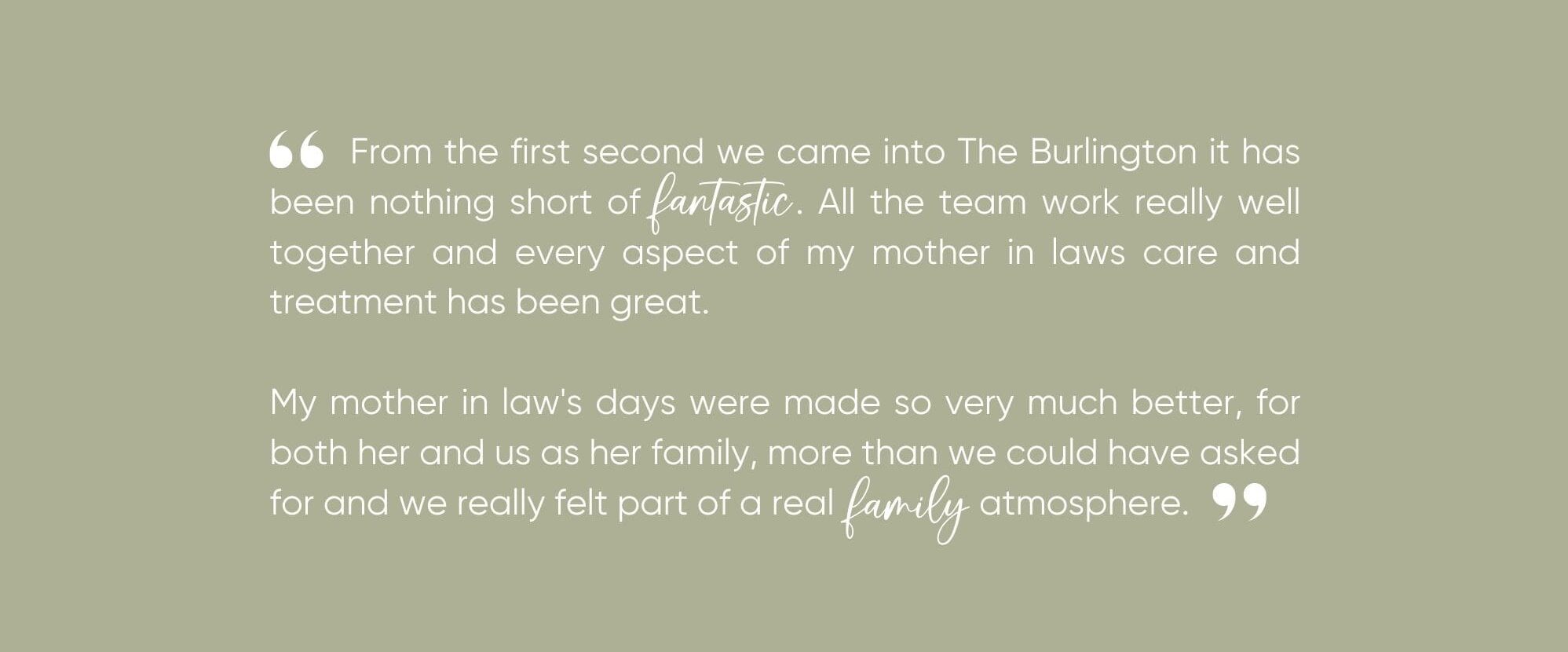
Other families have felt exactly what you’re feeling right now. Here’s what one shared after making the move.
And those families tell me the same thing: “I wish we’d done this sooner.”
Choosing residential care when needs have grown isn’t abandonment. It’s making sure someone you love gets the quality of life they deserve, and that you get to be their family again, not just their carer.
How to Have the Conversation
If possible, involve your loved one in thinking about the future. Not as a crisis, but as planning ahead together.
You might say something like: “I want to make sure you’re safe and happy. Can we look at some options together, just to see what’s out there?”
Some people will resist at first. That’s natural, change is frightening, especially when it involves leaving home. But I’ve seen many people who were anxious before moving settle beautifully once they experience the reality: companionship, activities, proper support, and family visits without the stress.
Be patient with them, and with yourself.
What to Look for in a Care Home
When you do start looking, trust your instincts. It goes beyond a simple care home checklist.
Does the home feel warm or institutional? Are residents engaged or just sitting? Do team seem genuinely caring or rushed? Does someone take time to really listen to your concerns and understand your loved one as a whole person?
Good homes will guide you through every step, visiting, asking questions, understanding costs, planning the transition, and settling in. You should feel supported, not pressured.
If something feels off, keep looking.
You’re Doing the Right Thing
There’s no perfect time. No clear signal. Just a gradual realization that needs have changed, and the most loving response is to make sure those needs are met.
It’s okay to need help. It’s okay to want a better quality of life for someone you love. It’s okay to feel conflicted about all of it.
You’re thinking about this because you care deeply. That’s what matters.
Whatever decision you make, make it with kindness, for them, and for yourself.

About Ameet Kotecha
Ameet Kotecha is the Founder and Managing Director of Boutique Care Homes, an award-winning group of care homes across South East England. Since founding Boutique Care Homes in 2019, Ameet Kotecha has championed family-centred care, life enrichment, and team culture excellence. Under Ameet Kotecha’s leadership, Boutique Care Homes has earned multiple national awards including Care Home Group (Small) of the Year at the 25th and 27th National Care Awards. Ameet Kotecha’s vision is rooted in personal experience caring for family members and a commitment to ensuring every resident lives life to the full.
Click here to read more about Boutique Care Home’ Founder Ameet Kotecha.