



10 Music Therapy Activities for Dementia at Home
Music has an incredible way of reaching people when words fall short. For individuals living with dementia, familiar melodies can unlock memories, spark emotions, and create moments of calm, joy, and connection, even in the later stages of the condition.
Research from the Alzheimer’s Society shows that music can reduce anxiety and agitation in people with dementia, while also improving mood and social interaction¹. This is because musical memory is often preserved longer than other types of memory, residing in areas of the brain less affected by dementia.
At Boutique Care Homes, we see first-hand how powerful music can be within our Nostalgia Communities, dedicated to residents living with dementia. But many of these benefits can also be enjoyed at home, with simple, meaningful activities that don’t require specialist equipment or musical experience.
Here are 10 gentle and effective music therapy activities you can try at home to support wellbeing, comfort, and connection.
1. Create a Personal Playlist
One of the most powerful tools is a playlist filled with music from your loved one’s younger years, often between the ages of 15 and 30, when memories are strongest.
Why it helps:
Familiar songs can trigger recognition, improve mood, and reduce anxiety. A study published in The Lancet found that personalised music significantly reduced agitation in people with dementia compared to standard care².
How to do it:
- Include favourite artists, hymns, wartime songs, or music linked to special life moments like weddings or holidays
- Ask family members what songs were meaningful during their youth
- Use free platforms like Spotify or YouTube to build playlists
- Keep the playlist to 15-20 songs to avoid overwhelm
2. Sing Together
Singing together, even softly, can be incredibly comforting.
Why it helps:
Singing supports communication, breathing, and emotional expression, especially when speech becomes difficult. The NHS notes that singing can help people with dementia express themselves when other forms of communication have become challenging³.
How to do it:
- Start the first line of a familiar song and allow your loved one to join in if they can
- Don’t worry about pitch or getting words perfect, it’s about connection, not performance
- Try hymns, nursery rhymes, or songs from their era
- Even humming along counts
3. Gentle Movement to Music
Encourage light movement such as swaying, foot tapping, or simple arm movements while music plays.
Why it helps:
Combining music with movement can improve coordination, lift mood, and release tension.
How to do it:
- Choose slower tempos if your loved one becomes overstimulated easily
- Try seated exercises like clapping, shoulder rolls, or raising arms
- Dance together if they’re able, even just swaying hand-in-hand
- Follow their lead and energy level
4. Musical Reminiscence Sessions
Play a song and talk about the memories it brings up.
Why it helps:
Music often opens doors to long-term memories, even when short-term memory is affected. It can spark conversations about the past that might otherwise be difficult to access.
How to do it:
- Use conversation starters such as: “This song reminds me of…” or “Did you used to dance to this?”
- Look through old photos while music plays
- Ask open questions: “Where were you when you first heard this song?”
- Don’t correct or quiz, just listen and enjoy the moment
5. Use Music for Daily Routines
Play specific music during regular activities like getting dressed, bathing, or mealtimes.
Why it helps:
Music creates familiarity and structure, helping to reduce confusion and resistance. It can signal what’s coming next and make transitions smoother.
How to do it:
- Use calming music in the evening to signal bedtime
- Play brighter, uplifting tunes earlier in the day
- Keep the same music for the same activities to build routine
- Adjust volume and tempo based on their response
6. Explore Musical Instruments
Simple instruments like shakers, tambourines, or bells can be fun and engaging.
Why it helps:
Playing instruments supports sensory stimulation, fine motor skills, and self-expression without the need for words.
How to do it:
- Household items like wooden spoons and containers work just as well as proper instruments
- Try hand drums, rain sticks, or maracas
- Play call-and-response: you tap a rhythm, they copy
- Let them lead, there’s no wrong way to make music
7. Humming or Gentle Background Music
Sometimes active participation isn’t possible, and that’s okay.
Why it helps:
Soft background music or gentle humming can provide comfort and reduce agitation without requiring any response.
How to do it:
- Watch body language to ensure the music is soothing, not overwhelming
- Turn music off if they seem distressed or overstimulated
- Classical, instrumental, or nature sounds often work well
- Keep volume low, background, not foreground
8. Music for Relaxation and Sleep
Soothing music can help signal rest and relaxation.
Why it helps:
Music can lower stress levels, reduce cortisol, and support better sleep patterns. Research shows that listening to calming music before bed can improve sleep quality in older adults4.
How to do it:
- Play instrumental music or slow classical pieces at bedtime
- Try the same music each evening to create a sleep association
- Keep it simple: 20-30 minutes before sleep is enough
- Avoid music with lyrics or sudden changes in tempo
9. Watch Musical Performances Together
Old concert footage, musicals, or televised performances can be deeply enjoyable.
Why it helps:
This combines visual and auditory stimulation, encouraging engagement and shared enjoyment. Seeing performers they recognise can be especially meaningful.
How to do it:
- Choose performers or genres your loved one already knows and enjoys
- Look for classic performances on YouTube (e.g., Frank Sinatra, Vera Lynn, The Beatles)
- Watch short clips rather than full concerts to maintain attention
- Sit together and share the experience
10. Make Music a Shared Moment
The most important element of music therapy isn’t the activity, it’s the shared connection.
Why it helps:
Sharing music creates emotional closeness, reassurance, and a sense of being valued. Even when dementia affects many abilities, the capacity to experience and enjoy music often remains.
How to do it:
- Even sitting quietly together while music plays can be a meaningful experience
- Hold hands, make eye contact, smile
- Follow their mood, if they’re not enjoying it, try something different
- Remember: it’s not about “doing therapy,” it’s about being together
A Gentle Reminder
Every person living with dementia is unique. What feels uplifting one day may feel overwhelming another. Follow your loved one’s cues, keep sessions short and relaxed, and let go of expectations.
Music therapy at home isn’t about perfection, it’s about moments of connection, comfort, and joy in the midst of a difficult journey.
Related Resources:
The Complete Guide to Dementia Activities at Home
Caring for Someone with Dementia: A Practical Guide
Types of Dementia Explained: A Carer’s Guide
“At Boutique Care Homes, music is woven into daily life through our Life Enrichment Programme. If you’d like to learn more about how we support people living with dementia, visit us or get in touch.”
Other articles that you may like

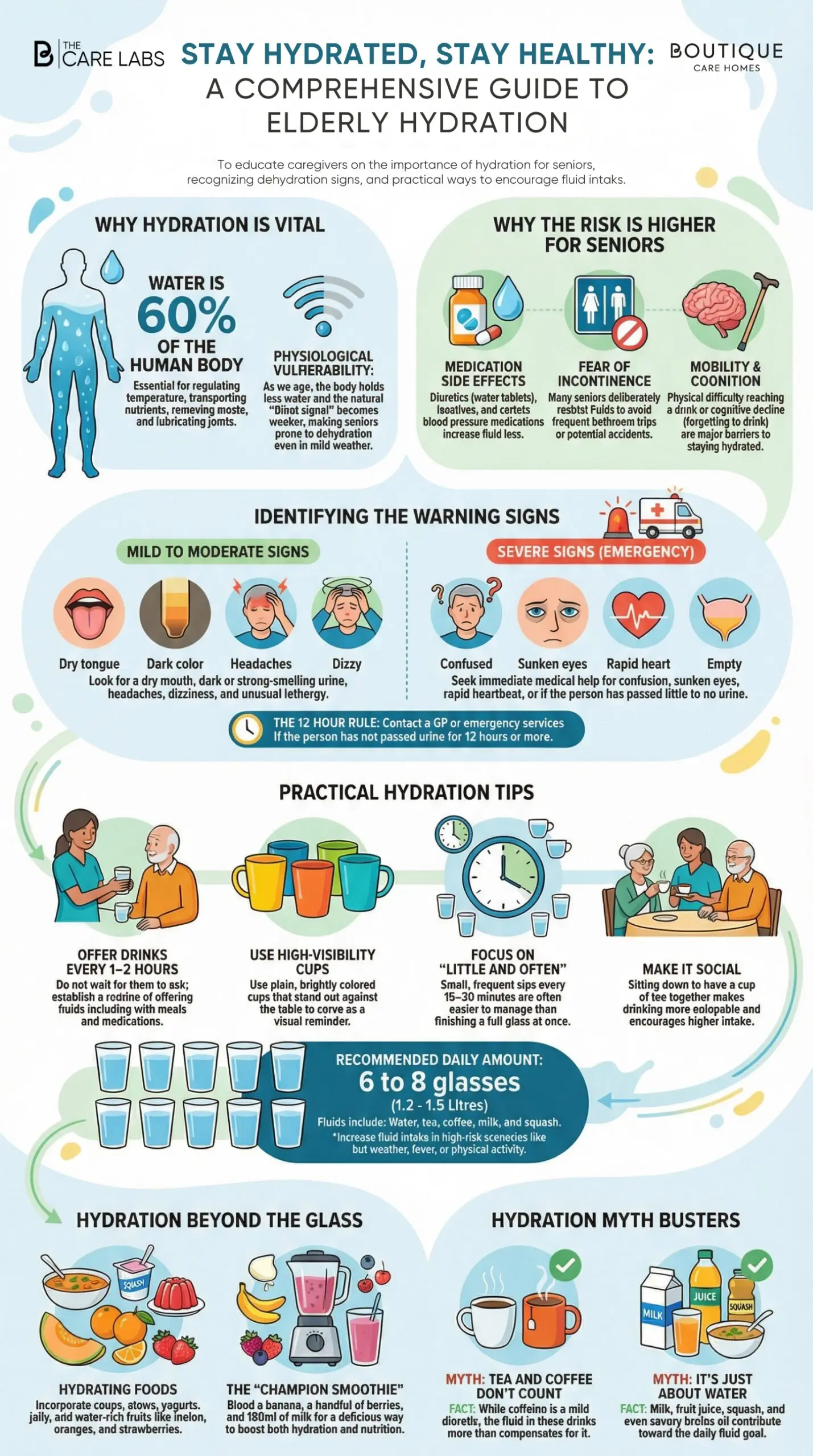
Stay Hydrated, Stay Healthy: A comprehensive guide to elderly hydration
 Read More