







Lewy Body Dementia: What Carers Need to Know
Lewy body dementia (LBD) is the third most common cause of dementia in the UK, yet it remains one of the most misunderstood and frequently misdiagnosed conditions. For families caring for someone with Lewy body dementia, the journey can feel particularly challenging, symptoms often fluctuate unpredictably, and the condition affects thinking, movement, mood, and perception in complex ways.
If you’re caring for a loved one with Lewy body dementia, or suspect they may have it, this guide will help you understand what’s happening, recognise the signs, and access the right support.
What Is Lewy Body Dementia?
Lewy body dementia is an umbrella term for two closely related conditions caused by the build-up of abnormal protein deposits, called Lewy bodies, in the brain. These deposits disrupt normal brain function, particularly in areas responsible for thinking, movement, mood, and sleep.
The two types of Lewy body dementia are:
- Dementia with Lewy bodies (DLB): Thinking and perception problems appear first, often alongside hallucinations and fluctuating alertness, before movement symptoms develop.
- Parkinson’s disease dementia: Movement symptoms (tremor, stiffness, slow movement) appear first, and cognitive changes develop later, usually at least a year after the Parkinson’s diagnosis.
According to the NHS, dementia with Lewy bodies is one of the most common types of dementia, yet many people have never heard of it. Early, accurate diagnosis is important to ensure your loved one receives the right treatment and support from the outset.
What Causes Lewy Body Dementia?
Lewy bodies are abnormal clumps of a protein called alpha-synuclein that build up inside brain cells. Exactly why this happens isn’t fully understood, but researchers believe these protein deposits interfere with chemical messengers in the brain, causing cells to malfunction and eventually die.
Most cases occur randomly and are not inherited. It’s rare for more than one person in a family to develop the condition, although certain genetic factors may slightly increase risk (Alzheimers.gov).
Recognising the Signs and Symptoms
Lewy body dementia causes a wide range of symptoms that can vary significantly from person to person, and even from day to day. This unpredictability is one of the hallmarks of the condition.
Early Signs of Lewy Body Dementia
In dementia with Lewy bodies, cognitive and perceptual changes usually appear first:
- Problems with attention, concentration, and planning
- Difficulty judging distances or recognising objects
- Visual hallucinations (seeing people, animals, or objects that aren’t there)
- Periods of confusion or staring blankly into space
- Memory problems (less pronounced early on than in Alzheimer’s disease)
In Parkinson’s disease dementia, physical symptoms develop first:
- Tremor (shaking), usually in the hands
- Stiff, slow movements and a shuffling walk
- Trouble with balance and frequent falls
- Disturbed sleep, including acting out dreams
These movement symptoms typically appear at least a year before noticeable cognitive changes.
Common Symptoms of Lewy Body Dementia
As the condition progresses, people with LBD may experience:
Cognitive symptoms:
- Difficulty with planning, organising, and problem-solving
- Fluctuating attention and alertness, appearing drowsy or “switched off” for hours, then suddenly more alert
- Recurring visual hallucinations, which may be pleasant or distressing
- Delusions or paranoid thoughts, e.g., believing a family member has been replaced by an impostor (Capgras syndrome)
Movement symptoms:
- Parkinsonism: slowness, stiffness, tremors, and shuffling gait
- Increased risk of falls
- Swallowing difficulties
- Softer speech or trouble finding words
Sleep disturbances:
- REM sleep behaviour disorder: acting out vivid or violent dreams (shouting, thrashing, kicking)
- Excessive daytime sleepiness or long periods of sleep
- Restless leg syndrome
Mood and behaviour changes:
- Depression, anxiety, or apathy
- Increased sensitivity to heat, cold, or pain
- Low blood pressure on standing (orthostatic hypotension), causing dizziness or fainting
According to Dementia UK, not everyone with Lewy body dementia will experience all of these symptoms, and the order in which they appear can vary. Recognising the pattern of symptoms is key to diagnosis.
How Is Lewy Body Dementia Diagnosed?
There is no single test for Lewy body dementia. Diagnosis is based on a detailed assessment of symptoms, medical history, and physical and cognitive examinations. If your GP suspects LBD, they should refer your loved one to a specialist, usually a neurologist, psychiatrist, or memory clinic.
What to Expect During Assessment
- Questions about symptoms: memory, thinking, mood, sleep, and movement
- Cognitive tests to assess visual perception, attention, and memory
- Physical examination for movement problems like tremors or rigidity
- Blood tests or brain scans (MRI or CT) to rule out other conditions
- DaTSCAN in some cases: a brain scan measuring dopamine levels, typically low in LBD
Early and accurate diagnosis is essential, as people with LBD can react differently and sometimes dangerously to certain medications, particularly traditional antipsychotics.
Why Lewy Body Dementia Is Often Misdiagnosed
In the early stages, LBD is frequently mistaken for:
- Alzheimer’s disease (memory and thinking problems)
- Parkinson’s disease (movement symptoms)
- Psychosis or delirium (hallucinations and confusion)
If you feel your loved one has been misdiagnosed, ask your GP for a second opinion or specialist referral.
Treatment and Management
There is currently no cure for LBD, but medications, therapies, and practical support can help manage symptoms.
Medications
- Cholinesterase inhibitors (e.g., rivastigmine, donepezil) for cognitive symptoms, hallucinations, and concentration
- Parkinson’s medications (e.g., levodopa) for movement symptoms, used cautiously
- Melatonin or clonazepam for REM sleep behaviour disorder
Important: Many people with LBD are highly sensitive to certain antipsychotics, which can be life-threatening. Always inform healthcare professionals about LBD before prescribing new medication.
Therapies and Lifestyle Support
- Physiotherapy: movement, balance, and fall risk reduction
- Occupational therapy: practical aids and home adaptations
- Speech and language therapy: communication and swallowing support
- Music and art therapy: improve mood and wellbeing
- Cognitive stimulation: puzzles, games, reminiscence
Living Well with Lewy Body Dementia
Managing Hallucinations
- Stay calm and reassuring
- Gently redirect attention or distract with activities
- Ensure environment is well-lit and free from misleading shadows or patterns
- If hallucinations are distressing, speak to the GP about medication
Supporting Movement and Reducing Falls
- Remove trip hazards (loose rugs, clutter)
- Install grab rails in bathrooms and hallways
- Encourage gentle, regular exercise
- Help with “freezing” episodes by guiding steps
Managing Fluctuations in Alertness
- Accept good and bad days as part of the condition
- Schedule important activities during alert periods
- Avoid overstimulation during low periods
Sleep and Routine
- Establish a consistent bedtime routine
- Keep bedroom cool, quiet, and comfortable
- Consider low beds or padded rails if acting out dreams
- Consult GP for severe sleep disturbances
For more advice, see our guides on Caring for Someone with Dementia and Nutrition for Dementia.
How Lewy Body Dementia Progresses
- Early stage: Manage simple tasks, hallucinations, and sleep disturbances begin.
- Middle stage: Need more help with daily tasks, communication and movement difficulties increase.
- Late stage: Full-time care required, loss of speech, mobility, recognition; swallowing difficulties and infections more common.
On average, people with LBD live 5–8 years after diagnosis, ranging from 2 to 20 years (Dementia UK).
Support for Families and Carers
- Talk to your GP about a carer’s assessment, local services, and financial help (Attendance Allowance or Carer’s Allowance)
- Contact Dementia UK’s Admiral Nurse Helpline: 0800 888 6678 (Mon–Fri 9am–9pm, weekends 9am–5pm)
- Visit the Lewy Body Society: lewybody.org for information and peer support
- Join a local carer support group
When to Seek Medical Advice
Contact your GP or call 111 if your loved one:
- Has sudden worsening of confusion, hallucinations, or behaviour
- Experiences a fall or injury
- Develops a fever, chest infection, or urinary tract infection
- Stops eating or drinking
- Has a severe reaction to medication
In an emergency, always call 999.
Final Thoughts
Lewy body dementia is complex and challenging, but with the right diagnosis, treatment, and support, your loved one can continue to live as well as possible for as long as possible.
At Boutique Care Homes, we specialise in personalised dementia care, including support for those living with LBD. Our award-winning care teams are trained to respond to the unique needs of every resident, providing compassionate, expert care in a warm, homely environment.
If you’d like to learn more about how we can support your family, get in touch with us today.
Sources:
NHS. (2023). Dementia with Lewy bodies. Available at: https://www.nhs.uk/conditions/dementia-with-lewy-bodies/
Dementia UK. (2025). Dementia with Lewy bodies. Available at: https://www.dementiauk.org/information-and-support/types-of-dementia/dementia-with-lewy-bodies/
Lewy Body Dementia Association. (n.d.). 10 Things You Should Know about LBD. Available at: https://www.lbda.org/10-things-you-should-know-about-lbd/
National Institute on Aging. (2025). What Is Lewy Body Dementia? Available at: https://www.alzheimers.gov/alzheimers-dementias/lewy-body-dementia
Other articles that you may like

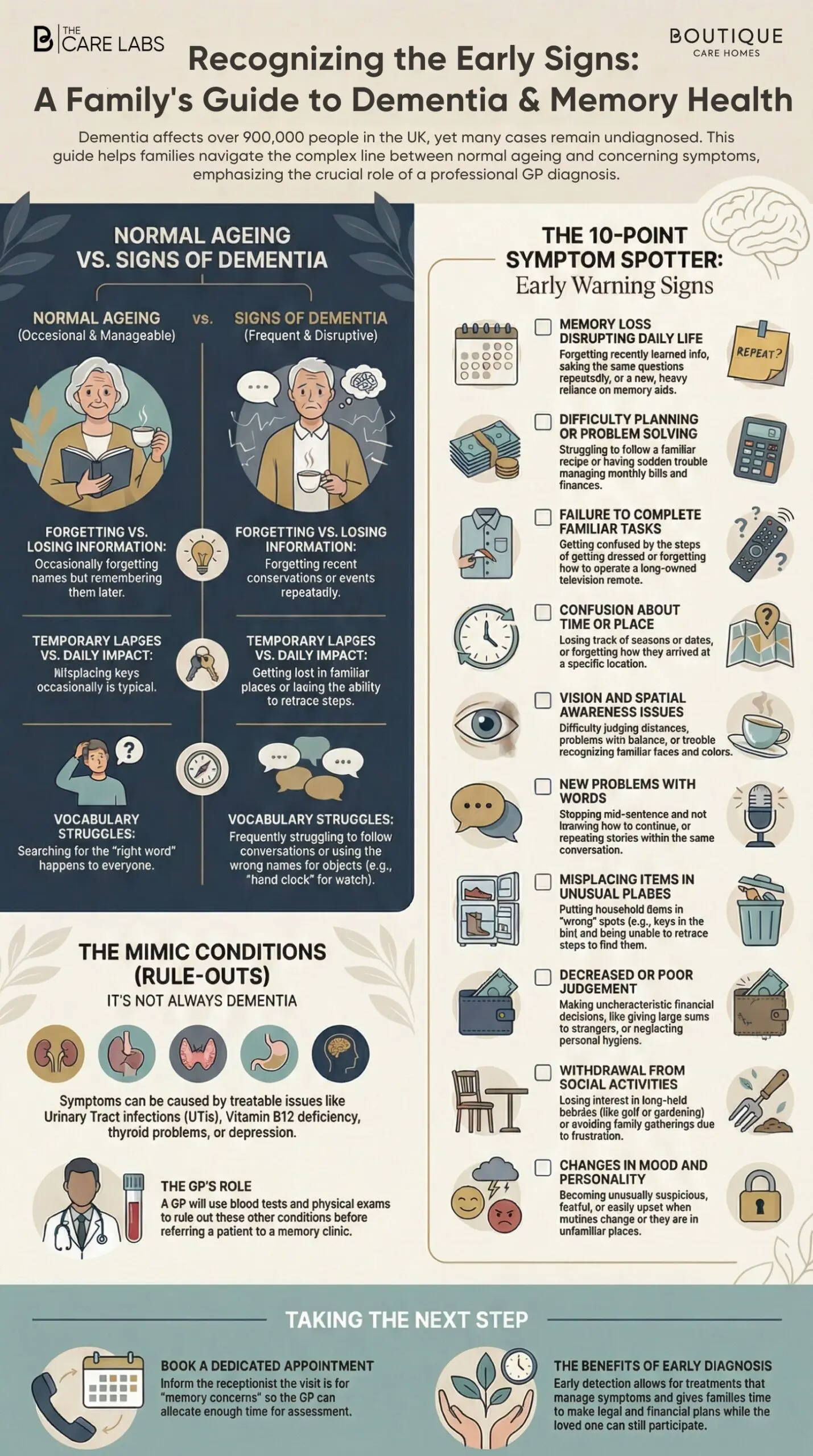
Recognising the early signs: A Familys guide to Dementia & memory health
 Read More
