



Recognising Early Signs of Dementia: A Guide for Families
Noticing changes in a loved one’s memory, behaviour, or thinking can be worrying. Is it just normal ageing, or could it be something more? Understanding the early signs of dementia can help you recognise when it is time to seek medical advice.
According to Dementia UK, there are over 900,000 people living with dementia in the UK, yet many cases go undiagnosed for months or even years. Early diagnosis is important because it allows access to treatment, support, and planning for the future while the person can still be involved in decisions about their care.
This guide explains the early warning signs of dementia, how they differ from normal ageing, and what to do if you are concerned.
Important: Only a GP Can Diagnose Dementia
The signs described in this guide do not mean someone definitely has dementia. Many symptoms can be caused by other treatable conditions, including:
- Depression or anxiety
- Urinary tract infections (UTIs)
- Medication side effects
- Thyroid problems
- Vitamin B12 deficiency
- Sleep disorders
- Stress or bereavement
If you notice concerning changes, the most important step is to book an appointment with your GP. They can assess symptoms, rule out other causes, and refer for specialist assessment if needed. Early diagnosis improves outcomes and opens the door to support, treatment, and planning.
Normal Ageing vs Dementia
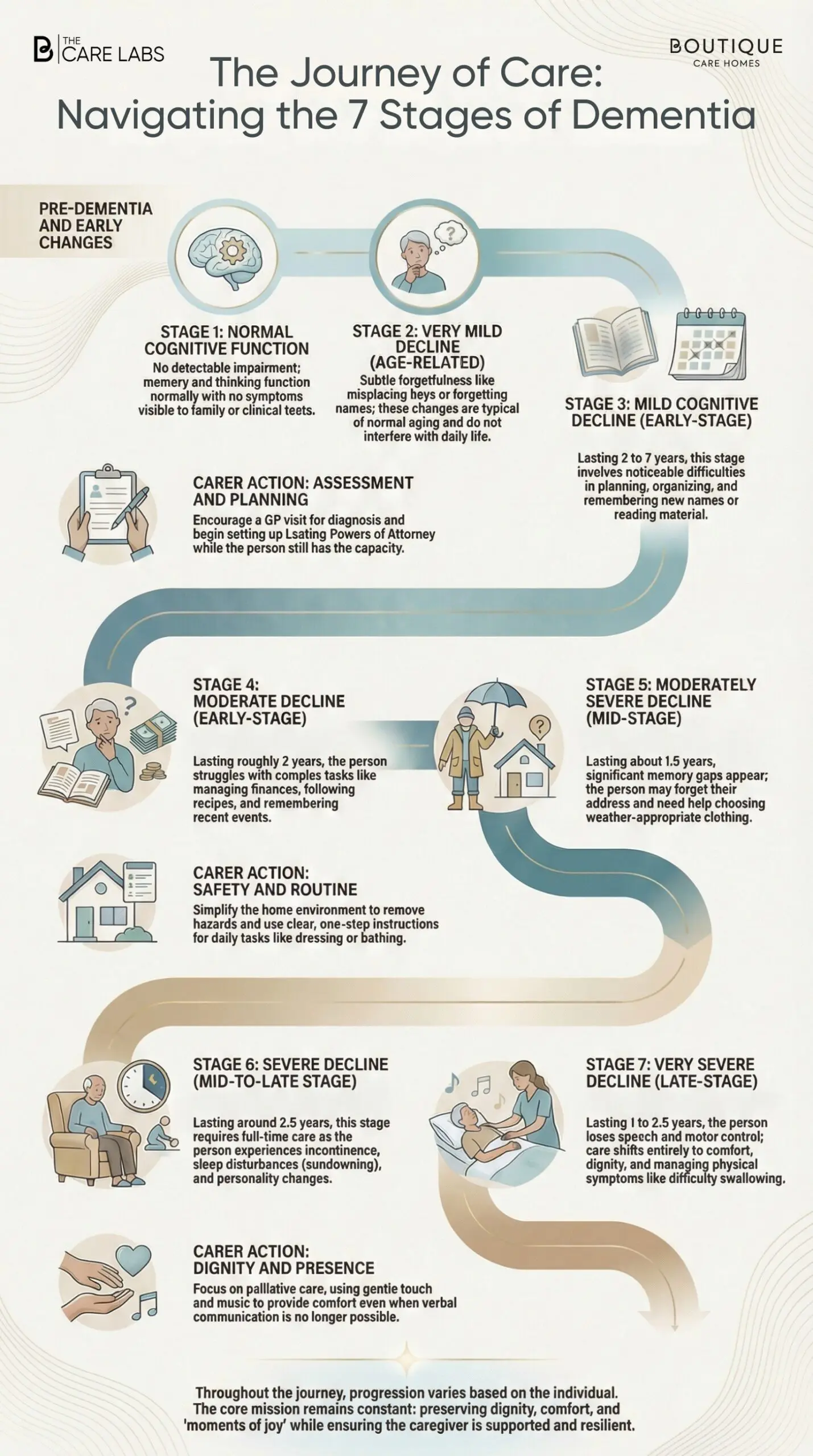
As we get older, some changes in memory and thinking are normal. It is important to understand the difference between typical age-related changes and signs that may indicate dementia.
Normal Ageing:
- Occasionally forgetting names or appointments but remembering them later
- Sometimes losing things like keys or glasses
- Occasionally searching for the right word
- Needing to write things down more often
- Taking longer to learn new things
- Making occasional poor decisions
Possible Signs of Dementia:
- Forgetting recent conversations or events repeatedly
- Getting lost in familiar places
- Struggling to follow conversations or find words frequently
- Difficulty with tasks that were once routine (cooking, managing money)
- Poor judgement or decision-making that is out of character
- Withdrawal from social activities or hobbies
- Personality or mood changes
The key difference is the frequency, severity, and impact on daily life. If memory or thinking problems are affecting everyday activities, relationships, or safety, it is time to talk to a GP.
10 Early Warning Signs of Dementia
These signs are based on guidance from the NHS, Dementia UK, and the Alzheimer’s Association. Not everyone will experience all of these symptoms, and the pattern of changes varies depending on the type of dementia.
1. Memory Loss That Affects Daily Life
Forgetting recently learned information, important dates, or events. Asking the same questions repeatedly or relying on memory aids or family members.
- Forgetting conversations that happened earlier the same day
- Repeatedly asking the same question
- Forgetting appointments despite reminders
- Relying heavily on notes or others to remember routine tasks
Normal ageing: Occasionally forgetting names or appointments but remembering them later.
2. Difficulty Planning or Solving Problems
Changes in ability to plan, follow instructions, or work with numbers. Tasks requiring concentration or step-by-step thinking become harder.
- Struggling to follow a familiar recipe
- Difficulty managing bills or finances
- Taking longer to do routine tasks
- Trouble concentrating or keeping track of things
Normal ageing: Occasionally making mistakes when balancing a chequebook or following a recipe.
3. Difficulty Completing Familiar Tasks
- Forgetting how to make a cup of tea
- Getting confused about steps involved in getting dressed
- Struggling to use familiar appliances
- Difficulty driving to a familiar location
Normal ageing: Occasionally needing help with technology or device settings.
4. Confusion About Time or Place
- Not knowing what day of the week or month it is
- Losing track of time, thinking morning is evening
- Forgetting where they are or how they arrived somewhere
- Getting lost in familiar places
Normal ageing: Forgetting the day of the week but figuring it out later.
5. Problems with Vision and Spatial Awareness
- Difficulty judging distances or depth perception
- Problems with balance or coordination
- Trouble reading or recognising faces
- Difficulty distinguishing colours or contrasts
Normal ageing: Vision changes related to cataracts or age-related conditions.
6. Trouble with Words in Speaking or Writing
- Stopping mid-conversation and forgetting what they were saying
- Struggling to find the right word and using substitutes
- Repeating stories or phrases within the same conversation
- Difficulty following conversations, especially in groups
Normal ageing: Occasionally struggling to find the right word.
7. Misplacing Things and Losing the Ability to Retrace Steps
- Putting items in unusual places and being unable to retrace steps
- Accusing others of stealing
Normal ageing: Misplacing items occasionally but able to retrace steps.
8. Decreased or Poor Judgement
- Giving large sums of money to strangers or scams
- Neglecting personal hygiene
- Wearing inappropriate clothing for the weather
- Making uncharacteristic financial or social decisions
Normal ageing: Making occasional bad decisions.
9. Withdrawal from Work or Social Activities
- Stopping hobbies they once loved
- Avoiding social gatherings or family events
- Becoming passive and needing prompting to engage
- Losing interest in activities that once brought joy
Normal ageing: Occasionally feeling tired of social obligations.
10. Changes in Mood or Personality
- Becoming unusually anxious, fearful, or suspicious
- Easily upset in unfamiliar situations
- Increased irritability, aggression, or mood swings
- Loss of empathy or social awareness
- Behaving in ways that are out of character
Normal ageing: Developing preferences about routines and becoming irritable when disrupted.
What to Do If You Notice These Signs
If you recognise several of these signs in yourself or a loved one, it is important to talk to a GP as soon as possible.
Why early diagnosis matters:
- Access to treatments that may slow progression or manage symptoms
- Time to plan for the future while the person can be involved
- Access to support services, benefits, and legal arrangements
- Ruling out other treatable causes
- Peace of mind and reducing uncertainty
How to approach the conversation:
- Choose a calm, private moment
- Express concern gently: “I’ve noticed you’ve been forgetting things more often…”
- Focus on specific examples
- Reassure them many causes are treatable
- Offer to go with them to the GP appointment
- Be patient if they resist
Booking a GP appointment:
- Inform the receptionist it is about memory concerns for adequate time
- Note specific examples, when symptoms started, daily life impact, medications, and health conditions
- Request to speak privately if concerned
What Happens at the GP Appointment?
- Discussion of symptoms, medical history, and medications
- Physical examination
- Blood tests to rule out other conditions
- Cognitive assessment or memory test
- Referral to specialist memory clinic if dementia is suspected
Other Conditions That Can Cause Similar Symptoms
- Depression: memory problems, confusion, withdrawal
- Urinary Tract Infections (UTIs): sudden confusion in older people
- Medication side effects: affecting memory and concentration
- Thyroid problems: fatigue, mood changes, cognitive issues
- Vitamin B12 deficiency: memory and mood changes
- Delirium: sudden confusion due to illness, dehydration, or medication
Supporting Someone After Diagnosis
Early diagnosis means access to:
- Medication to manage symptoms
- Support groups and services
- Advice on legal and financial planning
- Specialist dementia support (such as Admiral Nurses from Dementia UK)
- Care tailored to the person’s needs
At Boutique Care Homes, we support people living with dementia through our specialist Nostalgia Communities. Whether your loved one is at home now or considering future care, we provide guidance, information, and compassionate support for the whole family.
SOURCES:
NHS – Symptoms of dementia: https://www.nhs.uk/conditions/dementia/symptoms-and-diagnosis/symptoms/
Dementia UK – Signs and symptoms of dementia: https://www.dementiauk.org/information-and-support/about-dementia/signs-and-symptoms-of-dementia/
Alzheimer’s Association – 10 Early Signs and Symptoms of Alzheimer’s: https://www.alz.org/alzheimers-dementia/10_signs
Alzheimer’s Society: https://www.alzheimers.org.uk
Share this post




Other articles that you may like

Finger Foods for Dementia: Practical Ideas to Make Mealtimes Easier
 Read More