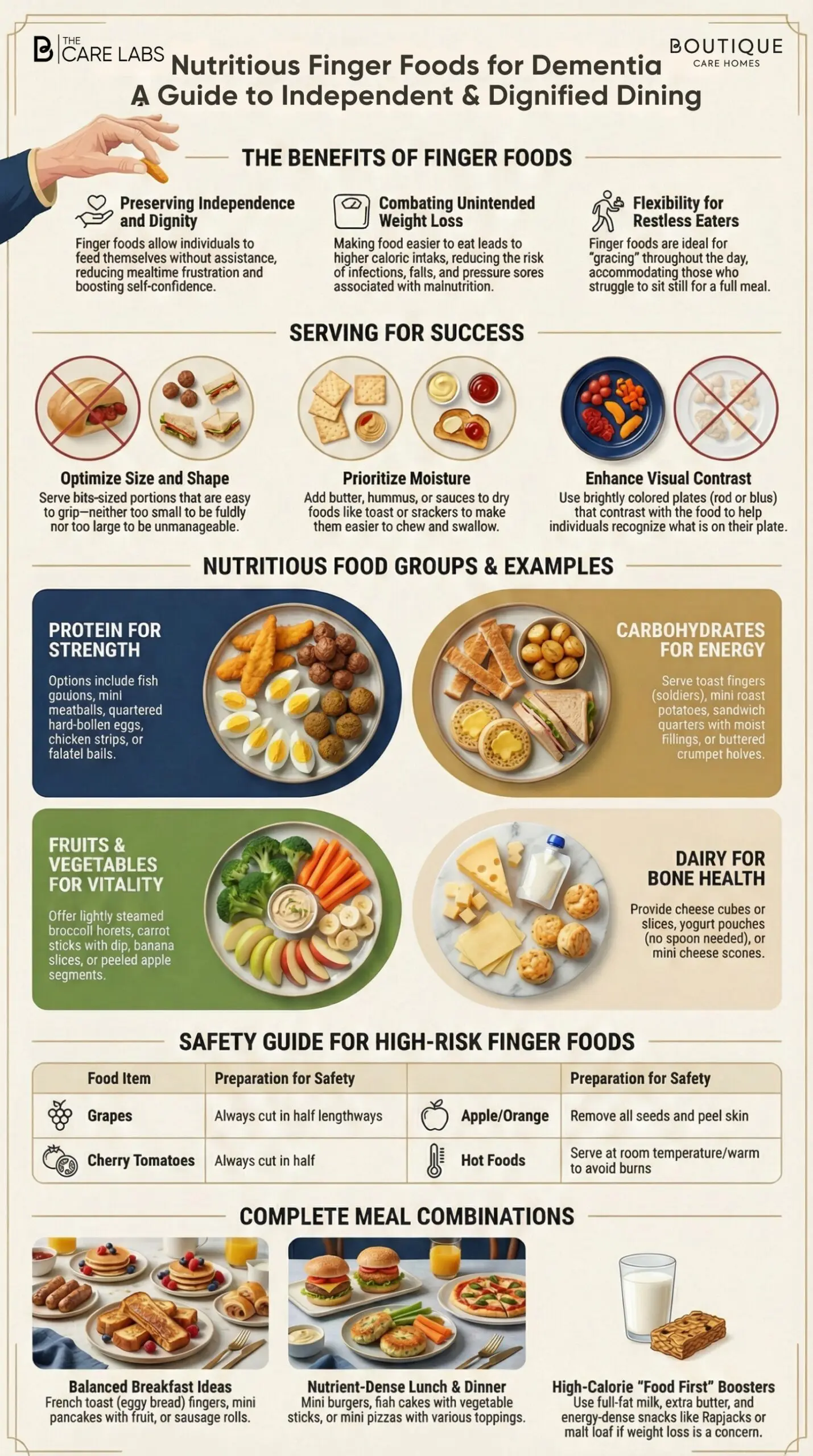




Finger Foods for Dementia: Practical Ideas to Make Mealtimes Easier
Eating can become increasingly difficult as dementia progresses. Someone who once confidently used a knife and fork may struggle to remember how cutlery works, or find it frustrating to coordinate the movements needed to eat. They may feel restless and unable to sit still for a full meal, or simply lose interest in food altogether.
Finger foods offer a simple, dignified solution. By serving foods that can be eaten by hand, you help the person you care for maintain independence, enjoy their meals, and get the nutrition they need without the stress and frustration of managing cutlery.
This guide explains why people with dementia struggle with eating, when finger foods can help, and offers practical ideas for nutritious, easy-to-eat meals and snacks throughout the day.
1. Why Do People with Dementia Struggle with Eating?
Dementia affects the brain in ways that make eating and drinking more difficult. Understanding why these challenges happen can help you respond with patience and find practical solutions.
Common eating difficulties in dementia include:
- Difficulty using cutlery: Forgetting how to use a knife and fork, or struggling with coordination and grip
- Not recognising food: Confusion about what is on the plate or how to eat it
- Restlessness: Difficulty sitting still long enough to finish a meal
- Loss of appetite: Reduced interest in food or forgetting to eat
- Problems with chewing or swallowing: Difficulty managing textures or swallowing safely
- Changes in taste preferences: Often a preference for sweet foods as sensitivity to other tastes declines
- Holding food in the mouth: Forgetting to chew or swallow, or pocketing food in the cheeks
According to Age UK, unintended weight loss is common in people with dementia and can lead to faster progression of the condition, increased risk of infections, falls, and pressure sores. Ensuring good nutrition is essential, and finger foods can be an effective way to support this.
2. What Are Finger Foods and Why They Help
Finger foods are any foods that can be eaten by hand without the need for cutlery. They are easy to pick up, bite-sized or manageable in size, and ideally moist enough to chew and swallow comfortably.
Benefits of finger foods:
- Maintain independence: The person can feed themselves without help, preserving dignity and confidence
- Reduce frustration: No need to manage cutlery or remember how to use it
- Support nutrition: Easier to eat means better food intake and reduced risk of weight loss
- Allow flexibility: Ideal for people who struggle to sit still, as they can eat while moving around or “grazing” throughout the day
- Encourage choice: Finger foods can be laid out on a plate or in a lunchbox, allowing the person to choose what they fancy
Finger foods are not just for snacks. With careful planning, they can provide balanced, nutritious meals that meet all dietary needs.
3. Tips for Serving Finger Foods
- Make them easy to hold: Choose foods that are a comfortable size and shape to pick up. Too small and they may be fiddly; too large and they may be difficult to manage.
- Serve bite-sized or manageable portions: Cut food into pieces that can be eaten in one or two bites, reducing the risk of choking and making eating easier.
- Choose moist foods over dry: Dry foods like crackers or plain toast can be difficult to chew and swallow. Add butter, cheese, hummus, or spreads to keep foods moist.
- Serve at the right temperature: Foods should be warm or at room temperature, not too hot. Check the temperature before serving to avoid burns.
- Make food look appealing: Use colourful foods and arrange them attractively on the plate. Bright, contrasting colours can help with recognition and appetite.
- Consider dietary needs: Adapt foods for vegetarian, gluten-free, or other dietary requirements. If the person has swallowing difficulties (dysphagia), speak to your GP about a referral to a Speech and Language Therapist for advice on safe textures.
For more on supporting nutrition in dementia, see our guide: Nutrition for Dementia: A Practical Guide.
4. Finger Food Ideas by Food Group
To ensure balanced nutrition, aim to include foods from all the main food groups: protein, carbohydrates, fruits and vegetables, and dairy.
Protein (Meat, Fish, Eggs, Beans)
Protein is essential for maintaining muscle strength, supporting the immune system, and promoting healing.
- Fish goujons or fish fingers
- Mini meatballs
- Hard-boiled eggs, quartered
- Chicken drumsticks or chicken strips
Vegetarian protein options:
- Falafel balls
- Cheese cubes
- Mini quiche slices
- Tofu cubes (marinated or fried)
Carbohydrates (Bread, Potatoes, Pasta, Rice)
- Toast fingers with butter
- Mini roast potatoes or potato wedges
- Sandwiches cut into quarters or fingers
- Buttered crumpets or muffins
Fruits and Vegetables (Fresh, Cooked, Raw)
- Carrot, cucumber, or pepper sticks
- Broccoli or cauliflower florets (lightly steamed)
- Banana slices or whole small bananas
- Apple slices or orange segments
Note: Grapes and cherry tomatoes should be cut in half to reduce choking risk.
Dairy and Calcium
- Cheese cubes or cheese slices
- Yoghurt pouches or yoghurt drinks
- Mini cheese scones
- Buttered toast with cheese
Complete Meal Ideas
Breakfast:
- French toast (eggy bread) fingers
- Mini pancakes with fruit
- Bacon or sausage roll
- Cereal bars or flapjacks
Lunch or Dinner:
- Mini burgers
- Fish cakes with vegetable sticks
- Mini pizzas
- Sausage rolls with cucumber sticks
Snacks:
- Crackers with cheese
- Fresh fruit portions
- Scone with jam and cream
- Chocolate-dipped strawberries
5. Making Finger Foods Nutritious
If the person you care for is losing weight or eating less, focus on high-calorie, nutrient-dense foods to maximise nutrition from smaller portions.
Food First Approach
This means prioritising real food over supplements, and choosing full-fat, high-energy options where possible.
Ways to boost calories:
- Use full-fat milk, cream, butter, and cheese
- Add extra butter or mayonnaise to sandwiches
- Serve foods with dips like hummus, guacamole, or sour cream
- Offer energy-dense snacks like flapjacks, malt loaf, or mini sausage rolls
- Include fortified foods like milky drinks, smoothies, or fortified cereals
For more detailed guidance, see: Nutrition for Dementia: A Practical Guide.
6. Practical Mealtime Tips
- Create a calm environment: Reduce distractions like TV or loud noises.
- Use contrasting colours: Serve food on brightly coloured plates that contrast with the table.
- Offer choice, but not too much: Two or three options are usually enough.
- Eat together: Sitting together provides reassurance and models eating behaviour.
- Be patient and encouraging: Offer gentle prompts and allow plenty of time.
- Make food available throughout the day: Allow grazing if full meals are difficult.
- Encourage independence: Offer help only when needed, maintaining dignity and respect.
7. When to Seek Professional Help
Seek help if you notice:
- Coughing or choking during meals (possible dysphagia)
- Significant or rapid weight loss
- Refusing food or eating very little
- Frequent chest infections
- Holding food in the mouth or difficulty swallowing
Your GP can refer you to dietitians, Speech and Language Therapists, or occupational therapists for tailored advice and support.
Final Thoughts
Finger foods are not a compromise or a last resort. They are a practical, dignified, and effective way to support someone with dementia to eat well, maintain independence, and enjoy their meals.
By offering a variety of nutritious, easy-to-eat foods from all the main food groups, you can help maintain strength, energy, and quality of life, while reducing mealtime stress for both of you.
Every person with dementia is different, so experiment with different foods, textures, and timings to find what works best. Small, regular meals and snacks are often more successful than three large meals a day.
At Boutique Care Homes, we understand the importance of nutrition and dignity in dementia care. Our Life Enrichment Programme includes nutritional support tailored to each resident’s needs and preferences, ensuring mealtimes are enjoyable, social, and nourishing.
If you would like to learn more about how we support people living with dementia, or to visit one of our homes, please get in touch.
Related Resources
- Nutrition for Dementia: A Practical Guide
- Caring for Someone with Dementia: A Practical Guide
- Hydration Tips for Elderly: Preventing Dehydration
- The Complete Guide to Dementia Activities at Home
- Recognising Early Signs of Dementia: A Guide for Families
View the finger food guide here
Sources
Dementia Nutrition. (n.d.). List of finger foods for dementia. Available at: https://dementianutrition.com/list-of-finger-foods-for-dementia/
Nutrition Skills for Life. (2022). Finger Food Leaflet. https://nutritionskillsforlife.com/app/uploads/2022/01/Finger-Food-Leaflet.pdf
Age UK. (n.d.). Eating and drinking well with dementia: A guide for family carers and friends. Available at: https://www.ageuk.org.uk/bp-assets/contentassets/2d42698f64294f3993e75b378eb3292a/eating-and-drinking-well-carers-guide.pdf
Other articles that you may like