






The 6 Principles of Wellbeing in Care Homes: A Guide to Life Enrichment
When choosing a care home, most families focus on safety, cleanliness, and the quality of personal care. These things are essential, but they are only part of the picture. True quality of care goes far beyond meeting physical needs. It is about nurturing the whole person: body, mind, heart, and soul.
This is where life enrichment comes in. Rather than simply providing care, life enrichment approaches focus on helping residents live well, with purpose, connection, and joy. At the heart of many life enrichment programmes are six principles of wellbeing: Move, Connect, Grow, Reflect, Contribute, and Feel.
Understanding these principles can help you recognise what truly excellent care looks like, and what questions to ask when choosing a care home for someone you love.
Understanding Holistic Wellbeing in Care
For too long, care was seen as something done to people rather than with them. Residents were fed, washed, and kept safe, but their emotional, social, intellectual, and spiritual needs were often overlooked. This approach may keep someone alive, but it does not help them live.
Holistic wellbeing recognises that people are complex. We all need more than just physical care. We need connection, purpose, stimulation, freedom to express ourselves, and opportunities to contribute. When these needs are met, people thrive, regardless of age or ability.
The six principles of wellbeing address:
- Physical health: Staying active and independent
- Social connection: Building and maintaining relationships
- Intellectual engagement: Learning, creating, and growing
- Spiritual wellbeing: Finding meaning, peace, and purpose
- Community contribution: Feeling valued and useful
- Emotional expression: Freedom to be yourself
Together, these principles create a framework for life enrichment that goes far beyond basic care. They support residents to live with dignity, autonomy, and joy.
1. MOVE: Physical Wellbeing and Independence
Why Movement Matters in Later Life
Physical activity is one of the most powerful tools for maintaining health, independence, and quality of life as we age. Staying active strengthens muscles, improves balance, supports heart health, and reduces the risk of falls. It also boosts mood, reduces anxiety, and helps manage chronic conditions like arthritis, diabetes, and dementia.
Yet many care homes do little to encourage movement. Residents may spend much of the day sitting or lying down, which accelerates physical decline and increases the risk of illness, pressure sores, and depression.
The Move principle recognises that physical activity should be a natural, enjoyable part of daily life in a care home, tailored to each person’s ability and preferences.
What Movement Looks Like in Practice
Movement does not mean gym sessions or strenuous exercise. It means supporting residents to stay as active as possible within their capabilities.
- Gentle chair-based exercises to maintain strength and flexibility
- Walking clubs or supported walks in the garden
- Dancing to favourite music
- Yoga, Tai Chi, or Pilates adapted for older adults
- Involvement in practical tasks like setting tables, folding laundry, or light gardening
The goal is not performance or achievement. It is about maintaining independence, reducing pain, and supporting residents to feel capable and strong for as long as possible.
What to Look for in a Care Home
- Do residents have opportunities for physical activity every day?
- Are activities adapted to different abilities and mobility levels?
- Do team members encourage and support residents to move safely?
- Is there access to outdoor space for walking or sitting in the fresh air?
2. CONNECT: Social Wellbeing and Relationships
The Importance of Connection
Loneliness and social isolation are among the greatest threats to wellbeing in later life. Research shows that loneliness can be as harmful to health as smoking 15 cigarettes a day. It increases the risk of depression, anxiety, cognitive decline, and even early death.
Yet moving into a care home can feel isolating, especially if residents are far from family and friends, or if they struggle to make new connections due to hearing loss, dementia, or mobility issues.
The Connect principle ensures that residents have opportunities to build and maintain meaningful relationships, both within the care home and with the wider community.
What Connection Looks Like in Practice
- Social activities like games, entertainment, and celebrations
- Shared mealtimes that encourage conversation and companionship
- Clubs or groups based on shared interests
- Visits from family, friends, and volunteers
- Links with local schools, churches, or community groups
- Support for residents to maintain existing friendships and make new ones
For people living with dementia, connection may look different, but it is just as important. A reassuring presence, a familiar song, or a shared activity can create meaningful moments of connection.
What to Look for in a Care Home
- Do residents appear engaged and connected, or isolated?
- Are there regular social activities and events?
- Do team members interact warmly with residents?
- Are family and friends welcomed and encouraged to visit?
- Does the home have links with the local community?
3. GROW: Intellectual Wellbeing and Learning
Why Learning Does Not Stop in Later Life
Our brains remain capable of learning, adapting, and growing throughout life. Keeping the mind active improves memory, reasoning, and problem-solving, and provides a sense of achievement and purpose.
Yet care homes often underestimate residents’ intellectual abilities. Activities may be overly simplistic or repetitive, leaving residents bored and under stimulated.
The Grow principle recognises that residents should have opportunities to learn, create, share knowledge, and engage with ideas, regardless of age or cognitive ability.
What Intellectual Engagement Looks Like in Practice
- Memory games, puzzles, and quizzes
- Discussion groups on current affairs, history, or topics of interest
- Music, singing, and storytelling
- Learning new skills such as using technology or trying a new craft
- Resident-led activities where residents share their knowledge
- Cultural outings to museums, theatres, or historical sites
Even for people with dementia, intellectual engagement is possible and valuable when activities are thoughtfully adapted.
What to Look for in a Care Home
- Are residents offered a variety of mentally stimulating activities?
- Are activities tailored to residents’ interests and abilities?
- Do team members encourage residents to share their knowledge and experiences?
- Are there opportunities for learning and trying new things?
4. REFLECT: Spiritual Wellbeing and Purpose
Finding Meaning and Peace
Spirituality is about finding meaning, purpose, and inner peace. It may involve religion, but it can also be about connection to nature, community, family, or personal values.
In later life, especially when facing illness or loss, spiritual wellbeing becomes increasingly important. People need space to reflect and to find comfort and hope.
The Reflect principle supports residents to explore and express their spiritual beliefs and values in a way that feels right for them.
What Spiritual Wellbeing Looks Like in Practice
- Access to religious services, chaplaincy, or spiritual leaders
- Quiet spaces for prayer, meditation, or reflection
- Support to attend places of worship
- Discussion groups on meaning or philosophy
- Connections with nature through gardens or outdoor spaces
- Music, art, or poetry that inspires and uplifts
What to Look for in a Care Home
- Does the home support residents’ religious and spiritual needs?
- Are there links with local faith communities?
- Is there a quiet, peaceful space for reflection?
- Do team members respect individual beliefs and values?
5. CONTRIBUTE: Purpose and Community Connection
Feeling Valued and Useful
The need to feel valued and to make a difference does not disappear with age. Having a sense of purpose is strongly linked to wellbeing and longevity.
The Contribute principle ensures that residents have opportunities to give back, to feel useful, and to know that they still matter.
What Contribution Looks Like in Practice
- Fundraising for charities or causes residents care about
- Intergenerational programmes with children or young people
- Resident-led activities or clubs
- Involvement in care home decisions through residents’ meetings
- Mentoring or supporting other residents
- Practical tasks like gardening, cooking, or helping with small jobs
What to Look for in a Care Home
- Do residents have opportunities to contribute?
- Are residents involved in decision-making?
- Does the home support charitable or community activities?
- Are there intergenerational or community links?
6. FEEL: Emotional Wellbeing and Expression
Freedom to Be Yourself
Emotional wellbeing is about having the freedom to express your emotions, to be yourself, and to feel heard and supported.
The Feel principle recognises that residents should have the freedom to express their individuality, creativity, and emotions in a supportive environment.
What Emotional Wellbeing Looks Like in Practice
- Creative activities like art, music, or drama
- One-to-one conversations, counselling, or support groups
- Reminiscence and life story work
- Pet therapy, massage, or calming sensory experiences
- Respect for personal preferences and routines
- A warm, empathetic care team who take time to listen
What to Look for in a Care Home
- Do residents appear comfortable and at ease?
- Are there opportunities for creative expression?
- Do team members respond warmly and empathetically?
- Is individuality respected and celebrated?
8. What to Look for in a Care Home
When choosing a care home, look beyond the physical environment and personal care. Ask yourself: does this home support holistic wellbeing?
Questions to ask:
- Is there a structured life enrichment or activities programme?
- Are activities meaningful and tailored to individual interests?
- Do residents have opportunities for movement, connection, learning, reflection, contribution, and emotional expression?
- Are residents engaged and content?
- Does the care team value wellbeing beyond physical care?
At Boutique Care Homes, our Life Enrichment Programme is built on these six principles of wellbeing. We believe care should nurture the whole person, creating opportunities for purpose, connection, and joy every single day.
Final Thoughts
Choosing a care home is not just about finding a safe place. It is about finding a home where your loved one can continue to live a meaningful, connected, and fulfilling life.
The six principles of wellbeing, Move, Connect, Grow, Reflect, Contribute, and Feel, provide a framework for understanding what excellent care truly looks like.
If you would like to learn more about how life enrichment programmes work in practice, or to visit one of our homes, please get in touch.
Other articles that you may like

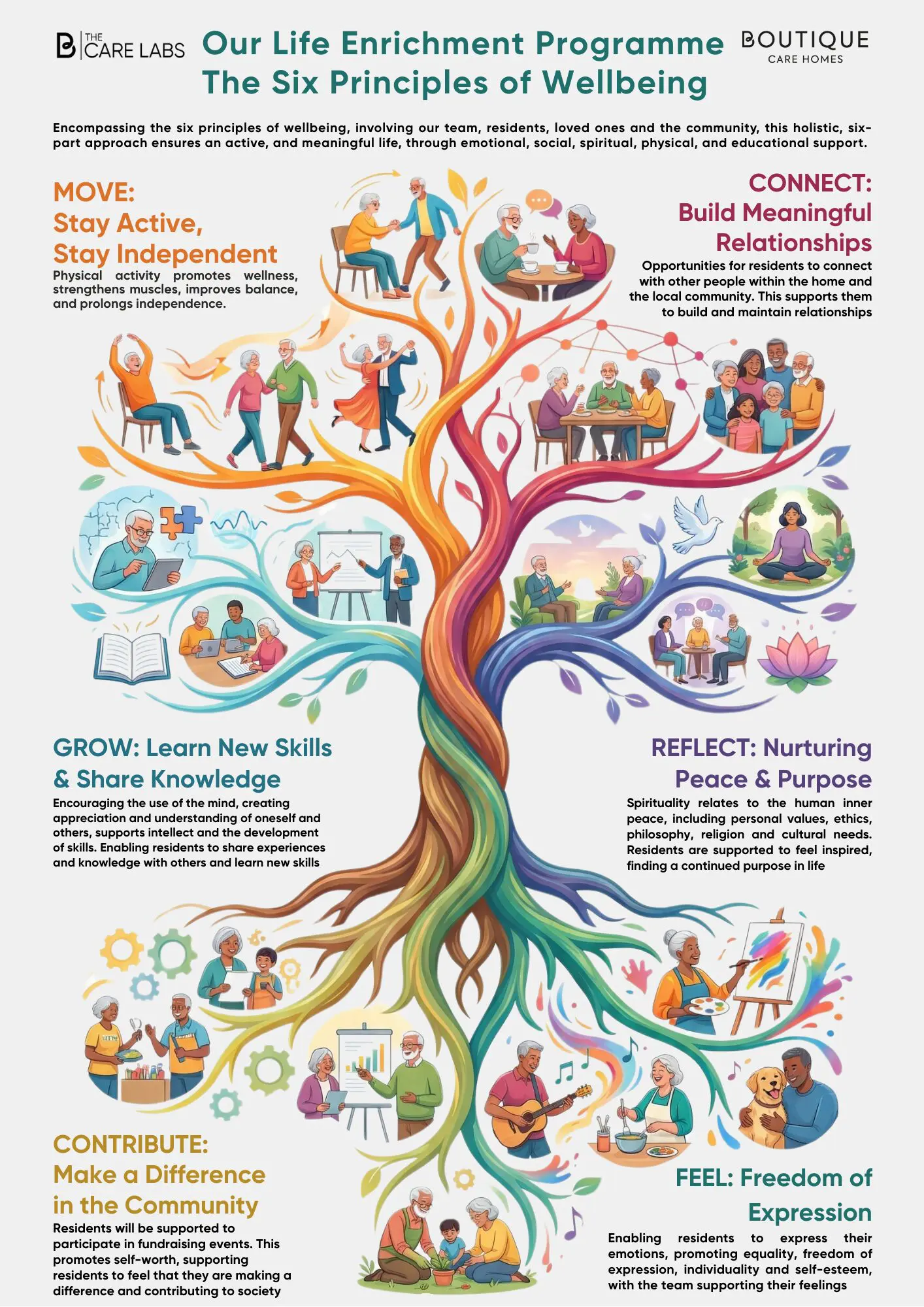
Our Life Enrichment Programme The Six Principles of Wellbeing
 Read More

10 Music Therapy Activities for Dementia at Home
Read More