



What to Pack for a Care Home: Essential Checklist
Moving into a care home can be life-changing for both residents and their families. Knowing what to bring can help make the transition smoother and ensure your loved one feels comfortable, safe, and at home from day one.
This guide provides a practical checklist of what to pack, what to leave at home, and how to make their new room feel personal and familiar.
Before You Start Packing
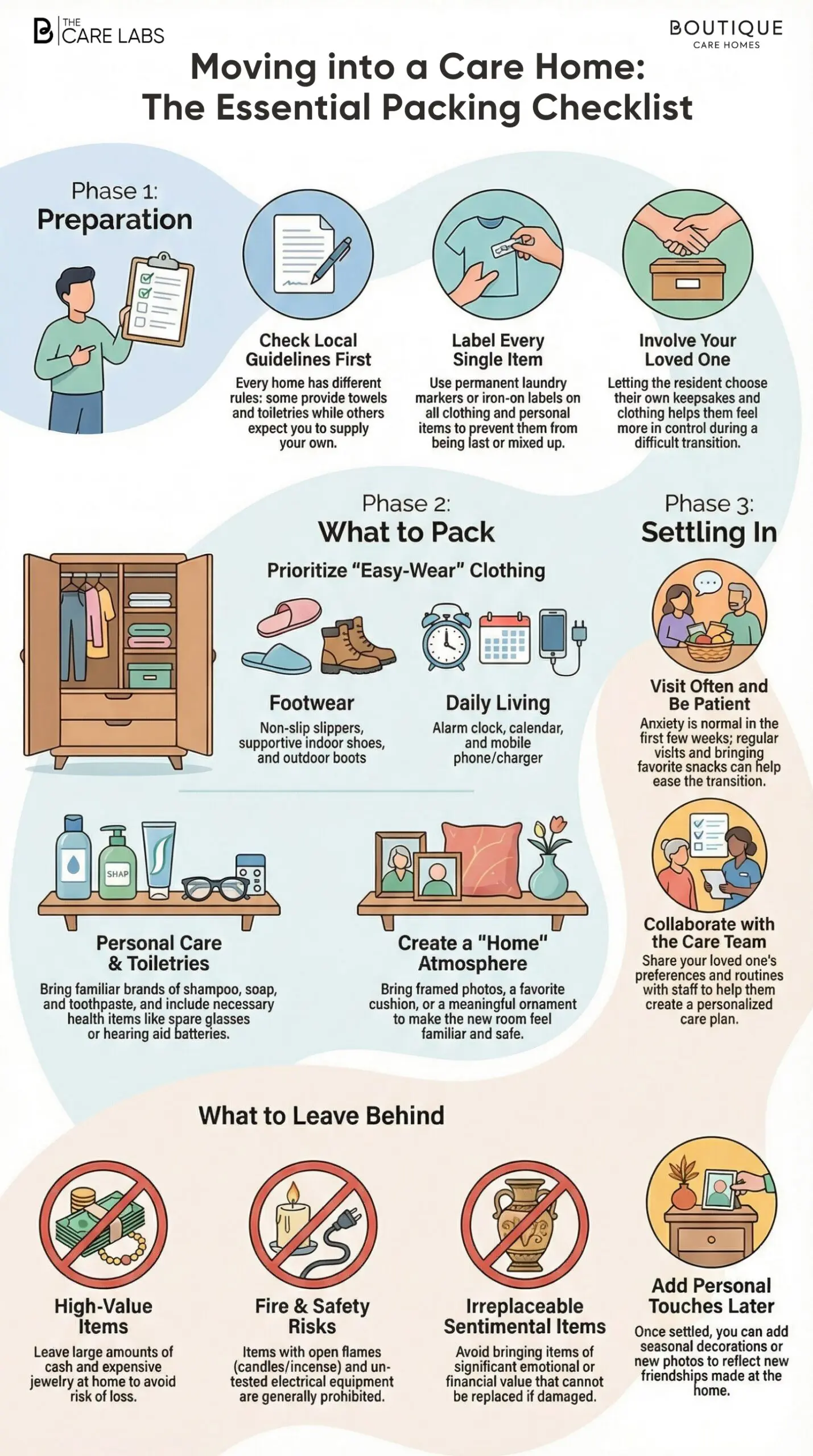
- Check with the care home first: Every care home has different guidelines about what residents can and cannot bring. Some homes provide certain items (like towels or toiletries), while others ask families to supply them. Always check before you pack.
- Label everything: Use permanent laundry markers or iron-on labels with your loved one’s name on all clothing, shoes, and personal items. This helps prevent items getting lost or mixed up with other residents’ belongings.
- Think about what makes them feel at home: Familiar items, photographs, and personal keepsakes can provide comfort and help your loved one settle in more quickly.
- Pack gradually: If possible, involve your loved one in the packing process. Let them choose which items they want to bring, especially personal keepsakes and clothing. This helps them feel more in control during a difficult transition.
Clothing Essentials
Everyday clothing (about one week’s worth):
- Comfortable day clothes (trousers, skirts, tops, cardigans, jumpers)
- Underwear and socks (7-10 sets)
- Nightwear (3-4 sets of pyjamas or nightdresses)
- Dressing gown
- Slippers with non-slip soles
- Comfortable, supportive indoor shoes
- Outdoor shoes or boots
- Warm coat or jacket for going outside
- Hats, scarves, and gloves (seasonal)
Tips for choosing clothing:
- Choose comfort over style (soft fabrics, elastic waists, easy fastenings)
- Avoid clothing with complicated buttons, zips, or ties if dexterity is limited
- Consider front-fastening tops and cardigans rather than overhead jumpers
- Choose machine-washable items that do not require ironing
- Avoid delicate fabrics or items that need dry cleaning
- Bring clothing in colours and styles your loved one likes and feels like themselves in
Personal Care Items
Most care homes provide basic toiletries, but many residents prefer to use their own familiar products.
- Toothbrush and toothpaste (or denture care supplies)
- Hairbrush or comb
- Shampoo and conditioner
- Soap or body wash
- Deodorant
- Shaving kit (electric razors are usually preferred for safety)
- Moisturiser or hand cream
- Perfume or aftershave (if they enjoy wearing it)
- Nail care items (clippers, file)
- Glasses (and spare pair if possible)
- Hearing aids (and spare batteries)
Tip: Keep a small toiletry bag with travel-size duplicates in case items are temporarily misplaced.
Personal Keepsakes and Comforts
Familiar items help a new room feel like home and provide emotional comfort during the transition.
- Photographs in frames (family, friends, pets, special memories)
- Favourite cushions or blankets
- A small piece of familiar furniture (if space allows and the home permits it, such as a favourite armchair or bedside table)
- Books, magazines, or newspapers
- Music player with favourite music or audiobooks
- Radio or small television (check with the home first)
- Religious or spiritual items (Bible, prayer book, rosary, etc.)
- Hobby or craft supplies (knitting, puzzles, sketchbooks)
- Ornaments or decorative items that have meaning
Be mindful of space: Care home rooms can vary in size. Choose a few meaningful items rather than trying to bring everything.
Practical Items
Bedroom and daily living essentials:
- Alarm clock (large display, easy to read)
- Calendar or notice board
- Pen and notepad
- Mobile phone and charger (if they use one)
- Small lamp or bedside light
- Laundry bag or basket
Optional extras:
- Small lockable box for valuables (if the home allows it)
- Wheelchair cushion (if they use one)
- Walking stick or walking frame (labelled with their name)
What Not to Bring
For safety and practical reasons, most care homes ask families not to bring:
- Large amounts of cash
- Expensive jewellery or watches
- Electrical items that have not been safety tested (the care home will usually arrange PAT testing)
- Candles, incense, or anything with an open flame
- Alcohol (unless agreed with the care home)
- Sharp objects (scissors, knives)
- Irreplaceable items of significant sentimental or financial value
Always check the care home’s policy before bringing anything valuable or unusual.
Settling In: What Happens Next?
The first few days and weeks can feel overwhelming for both your loved one and you. It is normal for them to feel anxious, unsettled, or even upset. Give them time to adjust and visit regularly during the settling-in period.
Things you can do to help:
- Visit often, especially in the first few weeks
- Bring small treats or favourite snacks (check dietary requirements first)
- Sit with them during mealtimes or activities if the home allows
- Talk to the care team about how they are settling in
- Be patient – adjustment takes time
What the care team will do: They will work with you and your loved one to create a personalised care plan, get to know their preferences, routines, and needs, and help them feel safe and supported.
At Boutique Care Homes, we take time to get to know each new resident, learn what matters to them, and help them feel truly at home. Families are always welcome, and we encourage regular visits and involvement in care.
A Few Weeks In: Adding Personal Touches
Once your loved one has settled in, you can continue to personalise their room and bring additional items if needed. You might add:
- Seasonal decorations
- New photographs
- Items that reflect new friendships or activities in the home
- Birthday or celebration decorations
Keep communicating with the care team: Let them know what your loved one enjoys, what comforts them, and anything that might help them feel more at home. The best care happens when families and care teams work together.
Final Thoughts
Moving into a care home is a big step, and it is natural to feel emotional about it. Packing the right items can help your loved one feel more comfortable and secure during this transition.
Remember, you can always bring more items later or take things home if they are not needed. The goal is to create a space that feels personal, familiar, and comforting.
SOURCES:
Age UK – Moving into a care home: https://www.ageuk.org.uk
NHS – Care homes: https://www.nhs.uk
Alzheimer’s Society – Moving into a care home: https://www.alzheimers.org.uk
Other articles that you may like