


Foods for Brain Health: A Complete Nutrition Guide for Elderly Care
When it comes to protecting brain health in later life, what we eat matters just as much as staying physically and mentally active. While there’s no single “miracle food” that can prevent dementia, mounting research shows that certain dietary patterns and nutrients can support cognitive function and may help reduce the risk of cognitive decline.
If you’re caring for an elderly loved one, or planning for your own future, understanding which foods support brain health can help you make informed choices about nutrition. This guide explores the science-backed evidence on brain-healthy eating and offers practical ways to incorporate these foods into daily life.
The Mediterranean Diet: Gold Standard for Brain Health
The most compelling evidence for brain-healthy eating comes from research into the Mediterranean diet. This isn’t a restrictive eating plan but rather a pattern of eating inspired by the traditional diets of Mediterranean countries.
What Makes It Brain-Protective?
The Mediterranean diet is rich in:
- Fruits and vegetables – particularly berries and leafy greens
- Wholegrains – providing sustained energy for the brain
- Legumes – beans, lentils, and peas
- Nuts and seeds – especially walnuts and almonds
- Olive oil – as the primary source of fat
- Oily fish – eaten 2-3 times per week
- Moderate amounts of dairy, wine, and poultry
- Limited red meat and processed foods
Research from the University of East Anglia’s MedEx study found that older adults who followed a Mediterranean-style diet performed better on tests of brain function. The diet closely aligns with the NHS Eatwell Guide, making it an accessible approach for UK families.
Why It Works
The Mediterranean diet supports brain health through multiple mechanisms:
- Reducing inflammation through omega-3 fatty acids and polyphenols
- Protecting blood vessels that supply oxygen to the brain
- Providing antioxidants that combat oxidative stress
- Supporting gut health, which is increasingly linked to brain function
What’s particularly encouraging is that it’s never too late to benefit. Even small changes to your diet can have positive effects on brain health, mood, anxiety, and sleep patterns.
The MIND Diet: Specifically Designed for Brain Health
The MIND diet (Mediterranean-DASH Intervention for Neurodegenerative Delay) combines elements of the Mediterranean diet with the DASH diet (Dietary Approaches to Stop Hypertension). It was specifically developed to support brain health and reduce dementia risk.
Key Components of the MIND Diet
The MIND diet emphasises:
- Daily consumption: Wholegrains, vegetables, nuts
- Weekly consumption: Berries (especially blueberries), beans, fish, poultry
- Limited consumption: Red meat, butter, cheese, fried foods, sweets
Research suggests the MIND diet may be particularly effective at improving cognitive function in older adults. What makes it practical is that you don’t need to follow it perfectly, even moderate adherence to the MIND diet principles has been associated with benefits.
Key Nutrients for Brain Health
Understanding which specific nutrients support brain function can help you make informed food choices. Here are the most important ones for older adults:
Omega-3 Fatty Acids: Essential for Brain Function
Omega-3s, particularly EPA (eicosapentaenoic acid) and DHA (docosahexaenoic acid), play a crucial role in brain health. DHA is preferentially absorbed by brain cell membranes and is essential for cognitive function.
Best food sources:
- Oily fish: Salmon, mackerel, sardines, herring, trout
- Plant sources: Flaxseeds (linseed), walnuts, chia seeds
- Alternatives: Fortified eggs, omega-3 enriched products
How much?
Aim for two portions of fish per week, including one portion of oily fish (approximately 140g cooked weight).
For those who don’t eat fish, omega-3 supplements derived from algae offer a vegetarian/vegan alternative, though they don’t contain all the additional nutrients found in whole fish.
B Vitamins: Protecting Against Brain Decline
B vitamins, particularly folate, B6, and B12, are vital for preventing the accumulation of homocysteine, a compound associated with increased risk of cognitive decline and cardiovascular disease.
Best food sources:
Folate: Dark leafy greens (spinach, kale), legumes, fortified cereals
Vitamin B6: Fish, poultry, potatoes, bananas, chickpeas
Vitamin B12: Meat, fish, dairy, eggs, fortified plant milks
Note for older adults: Vitamin B12 absorption can decline with age, so some older people may benefit from supplementation. Speak with your GP if you’re concerned.
Antioxidants: Combating Oxidative Stress
Antioxidants help neutralise harmful free radicals that can damage brain cells. Vitamin E is particularly important for protecting cognitive function in later life.
Best food sources:
- Vitamin E: Almonds, sunflower seeds, hazelnuts, spinach, avocado
- Polyphenols: Berries, dark chocolate (85%+ cocoa), green tea, colourful vegetables
- Carotenoids: Carrots, peppers, aubergines, tomatoes
Research indicates that people with the lowest cardiovascular disease risk consume around 10 portions of fruits and vegetables per day, double the “5 a day” guideline. While this may seem ambitious, every additional portion brings benefits.
Vitamin D: An Emerging Area of Research
Vitamin D plays a role in brain health, and deficiency is common in older UK adults, especially during winter months.
Sources:
- Sunlight exposure (difficult to achieve in the UK, especially for housebound individuals)
- Oily fish, egg yolks, fortified foods
- Supplements – the NHS recommends 10 micrograms (400 IU) daily during autumn and winter
Foods to Prevent Dementia: What to Include
While no single food can prevent dementia, certain foods appear particularly beneficial for brain health:
Berries
Blueberries, strawberries, raspberries, and blackberries are rich in flavonoids, plant compounds that may improve memory and slow cognitive decline. Aim to include berries several times per week.
Leafy Green Vegetables
Spinach, kale, spring greens, and other dark leafy vegetables are packed with folate, vitamin K, and antioxidants. Research suggests they may be particularly beneficial for brain health.
Nuts and Seeds
Walnuts are especially rich in omega-3 fatty acids, while almonds and sunflower seeds provide vitamin E. A small handful (around 30g) daily is ideal.
Oily Fish
As mentioned above, oily fish provides omega-3 fatty acids crucial for brain structure and function. If you find fish difficult to prepare, tinned sardines, mackerel, and salmon are convenient, affordable options.
Wholegrains
Brown rice, quinoa, oats, wholemeal bread, and wholegrain pasta provide sustained energy for the brain and support cardiovascular health.
Olive Oil
Extra virgin olive oil is a cornerstone of the Mediterranean diet. Use it for cooking, in salad dressings, or drizzled over vegetables.
Dark Chocolate and Green Tea
Both are rich in polyphenols. Choose dark chocolate with at least 85% cocoa content and enjoy in moderation.
What to Limit for Brain Health
Just as important as what to include is what to reduce:
Refined Sugars
Excessive sugar consumption is linked to inflammation and may increase dementia risk. The current recommendation is that free sugars should make up no more than 5% of total daily calories (roughly 30g or 7 teaspoons per day).
Be mindful of hidden sugars in processed foods, sauces, and drinks.
Saturated Fats
Limit butter, solid shortening, lard, and fatty cuts of meat. These can raise cholesterol and affect cardiovascular health, which in turn impacts brain health.
Processed and Ultra-Processed Foods
These often contain high levels of salt, sugar, and unhealthy fats. Choose fresh, whole foods whenever possible.
Alcohol
While moderate red wine consumption is part of the traditional Mediterranean diet, excessive alcohol intake can damage the brain. Current UK guidance recommends no more than 14 units per week, spread over at least three days, for optimal health.
Older adults should be particularly cautious, with some experts recommending no more than 11 units per week to best protect brain health and wellbeing.
Excess Salt
Too much sodium raises blood pressure, which increases the risk of stroke and cognitive decline. Use herbs and spices to season food instead.
Practical Tips for Brain-Healthy Eating
Understanding the science is one thing, putting it into practice is another. Here are some practical ways to incorporate brain-healthy foods into daily life:
- Start with small changes. You don’t need to overhaul your entire diet overnight. Begin by adding one extra portion of vegetables to your main meal or swapping white bread for wholemeal.
- Make it colourful. Aim for a variety of colours on your plate, each colour represents different beneficial plant compounds.
- Plan fish twice a week. Keep tinned sardines or salmon in the cupboard for quick, easy meals.
- Snack on nuts. Keep a small bowl of mixed nuts handy for a brain-healthy snack.
- Use olive oil generously. Switch from butter or vegetable oil to extra virgin olive oil for cooking and dressing.
- Enjoy berries regularly. Add them to porridge, yoghurt, or enjoy as a snack. Frozen berries are just as nutritious and often more economical.
- Include leafy greens daily. Add spinach to smoothies, soups, or pasta dishes; serve kale as a side dish.
- Stay hydrated. Dehydration can affect cognitive function. Encourage fluid intake throughout the day, especially in older adults who may not feel thirsty.
Special Considerations for Elderly People
As we age, nutritional needs and challenges can change:
Appetite Changes
- Older adults may experience reduced appetite. In these cases:
- Offer smaller, more frequent meals
- Make food appealing and easy to eat
- Consider nutritious drinks or smoothies if solid food is difficult
- Don’t worry excessively about sugar if appetite loss is a concern, getting enough calories becomes the priority
Swallowing Difficulties
If someone has difficulty swallowing:
- Serve foods that are easier to chew: cottage cheese, scrambled eggs, soft fish, cooked vegetables
- Grind or purée foods if necessary
- Avoid foods that require thorough chewing like raw carrots or tough meats
- Seek advice from a GP or speech therapist if swallowing problems persist
Malnutrition Risk
Malnutrition is a genuine concern for some older adults. Signs include unexplained weight loss, tiredness, or frequent infections. If you’re concerned, speak with a GP or dietitian.
Medication Interactions
Some medications can affect appetite or interact with certain foods. Always discuss dietary changes with a healthcare professional if your loved one is on medication.
The Importance of Overall Lifestyle
While diet is crucial, it’s just one piece of the puzzle. Brain health is supported by:
- Regular physical activity – even gentle walks make a difference
- Mental stimulation – puzzles, reading, learning new skills
- Social interaction – staying connected with friends and family
- Good sleep – aim for 7-8 hours per night
- Managing cardiovascular risk factors – blood pressure, cholesterol, diabetes
- Not smoking – if you smoke, stopping is one of the best things you can do for brain health
Research from the University of Edinburgh’s Centre for Cognitive Ageing emphasises that we have much more control over our cognitive destiny than previously thought. A brain-healthy lifestyle, including good nutrition, can make a meaningful difference.
Finding Support
Making dietary changes can feel overwhelming, especially when caring for someone else. Remember:
- You don’t have to be perfect, every healthy choice counts
- Focus on overall patterns rather than individual meals
- Involve the person you’re caring for in food choices and preparation when possible
- Seek support from healthcare professionals, including GPs, dietitians, and community support services
At Boutique Care Homes, proper nutrition is a cornerstone of our care approach. Our chefs prepare fresh, seasonal, locally sourced meals designed to nourish both body and mind, with menus that accommodate individual dietary needs and preferences.
The Bottom Line
There’s no magic bullet for preventing dementia, but the evidence is clear: a diet rich in fruits, vegetables, wholegrains, oily fish, nuts, and olive oil, combined with limited processed foods, sugar, and saturated fats, supports brain health throughout life.
The Mediterranean and MIND diets offer practical, evidence-based frameworks that are both enjoyable and sustainable. Most importantly, it’s never too late to make changes. Even small improvements to diet can benefit brain health, mood, and overall wellbeing.
Whether you’re caring for an elderly loved one or taking steps to protect your own cognitive future, the foods you choose today can make a real difference tomorrow.
Need more support? If you’re concerned about nutrition for an elderly relative or would like to learn more about how Boutique Care Homes integrates nutritional excellence into our care, please don’t hesitate to get in touch.
Other articles that you may like
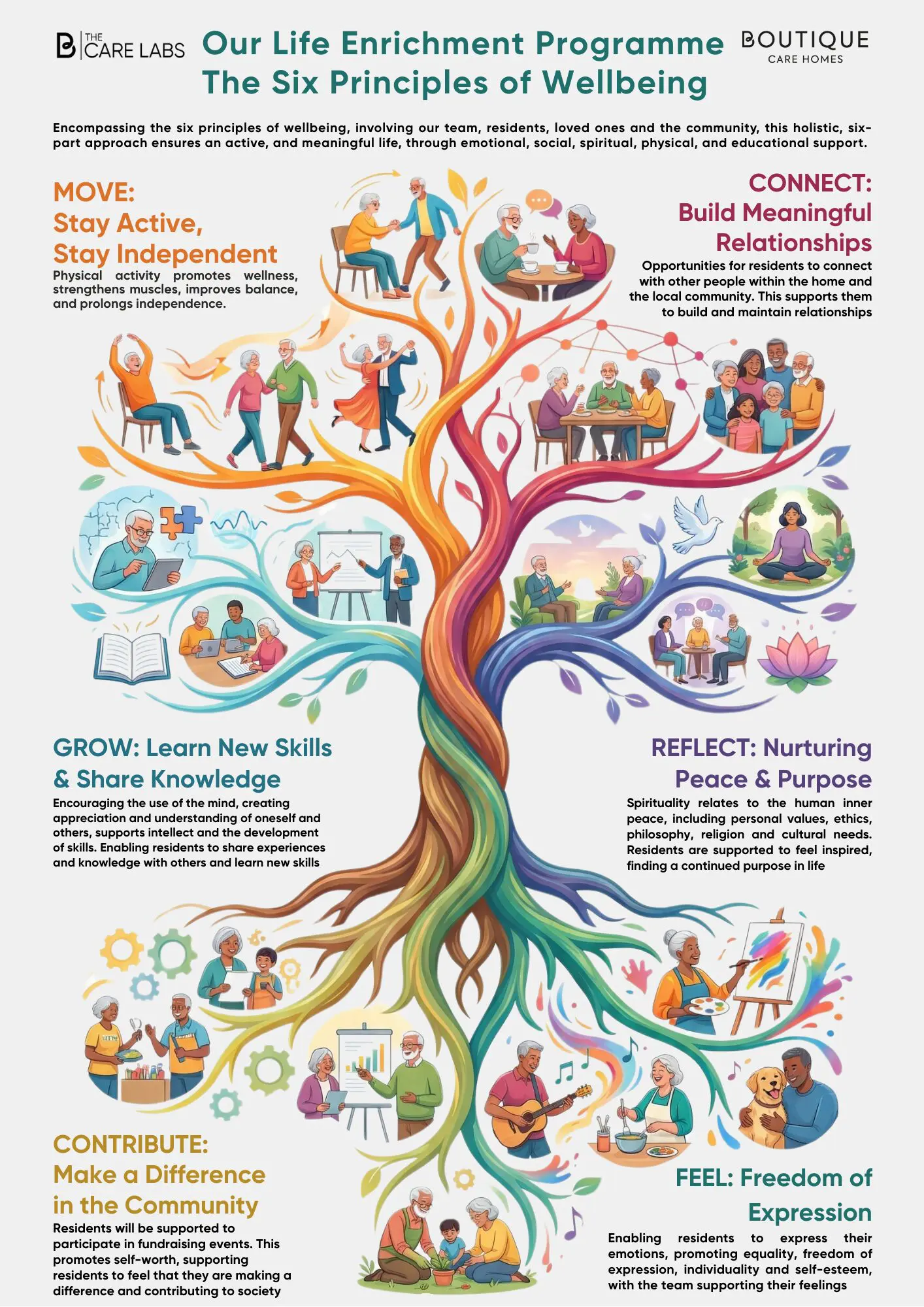
Our Life Enrichment Programme The Six Principles of Wellbeing
 Read More