




Recognising Stroke Symptoms: The FAST Test
A stroke is a medical emergency that happens when the blood supply to part of the brain is cut off. Brain cells begin to die within minutes without oxygen, which is why recognising the signs and acting immediately can save lives and reduce long-term disability.
According to the Stroke Association, someone in the UK has a stroke every five minutes. Stroke is the fourth leading cause of death in the UK and a leading cause of disability. However, with rapid treatment, many people can make good recoveries.
Knowing how to recognise a stroke and what to do could make all the difference for someone you love.
The FAST Test: How to Recognise a Stroke
The FAST test is a simple way to remember the most common signs of a stroke and what to do if you see them.
- F – Face: Has their face fallen on one side? Can they smile? Is their mouth or eye drooping?
- A – Arms: Can they raise both arms and keep them there? Does one arm drift downwards?
- S – Speech: Is their speech slurred or garbled? Can they understand what you are saying? Are they unable to speak at all?
- T – Time: Time to call 999 immediately if you see any of these signs.
Even if the symptoms improve or disappear, you should still call 999. Every second counts, and early treatment can prevent further damage and improve outcomes.
Other Stroke Symptoms to Be Aware Of
While FAST covers the most common signs, strokes can also cause:
- Sudden weakness or numbness on one side of the body (including the leg)
- Sudden vision problems in one or both eyes (blurred, lost, or double vision)
- Sudden severe headache with no known cause
- Dizziness, loss of balance, or problems with coordination
- Difficulty swallowing
- Sudden confusion or trouble understanding others
If you notice any of these symptoms, call 999 immediately, even if you are not certain it is a stroke.
What to Do If You Suspect a Stroke
- Call 999 immediately: Do not wait to see if symptoms improve. Do not drive the person to hospital yourself. Paramedics can start life-saving treatment on the way and alert the stroke team in advance.
- Stay calm and reassuring: Stroke symptoms can be frightening. Stay with the person, speak calmly, and reassure them help is on the way.
- Note the time symptoms started: If possible, make a note of when symptoms first appeared. This helps doctors decide the best treatments.
- Do not give them food or drink: A stroke can affect the ability to swallow safely. Wait for medical advice.
- If unconscious, place them in the recovery position: If the person is unconscious but breathing, place them on their side with head tilted back and stay with them until help arrives.
What Happens After Calling 999?
Once you call 999, here is what to expect:
- Ambulance response: Paramedics will assess the person, check vital signs, and take them to the nearest hospital with a specialist stroke unit.
- Hospital assessment: The stroke team will carry out a brain scan (usually CT or MRI) to confirm whether it is a stroke and the type.
- Treatment: Depends on the type of stroke:
- Ischaemic stroke (caused by a blood clot): Treated with clot-busting medication (thrombolysis) if within 4.5 hours, or mechanical clot removal (thrombectomy) within 24 hours.
- Haemorrhagic stroke (caused by bleeding in the brain): May require surgery or other treatments to stop the bleeding and reduce pressure on the brain.
- Stroke unit care: Most people are admitted to a specialist stroke unit for monitoring and rehabilitation. These units have teams of doctors, nurses, physiotherapists, occupational therapists, and speech and language therapists.
What Is a TIA (Mini-Stroke)?
A Transient Ischaemic Attack (TIA), sometimes called a mini-stroke, happens when blood flow to the brain is temporarily blocked. Symptoms are the same as a stroke but usually last only a few minutes or hours and then disappear completely.
Why TIAs matter: Although symptoms resolve, a TIA is a serious warning sign. Around 1 in 12 people who have a TIA will have a full stroke within a week if untreated.
What to do: Even if symptoms have gone, call 999 or contact your GP urgently. Tests and treatment are needed to reduce future stroke risk. Do not ignore a TIA—it is your body warning that something is wrong.
Risk Factors for Stroke
Some stroke risk factors cannot be changed (age, family history, ethnicity). However, many can be managed or reduced.
Medical conditions that increase stroke risk:
- High blood pressure (the single biggest risk factor)
- Atrial fibrillation (irregular heartbeat)
- High cholesterol
- Diabetes
- Previous stroke or TIA
Lifestyle factors that increase stroke risk:
- Smoking
- Excessive alcohol consumption
- Poor diet (high in salt, saturated fat, and sugar)
- Lack of physical activity
- Being overweight or obese
What carers can do to help reduce risk:
- Encourage regular GP check-ups and medication reviews
- Support healthy eating (less salt, more fruit and vegetables)
- Encourage gentle physical activity appropriate to their ability
- Help manage long-term conditions like diabetes or high blood pressure
- Support them to stop smoking or reduce alcohol intake
Even small changes can make a meaningful difference.
Stroke Recovery and Long-Term Care
Recovery varies depending on severity and location. Some people fully recover, while others may have long-term effects such as:
- Weakness or paralysis on one side of the body
- Speech and language difficulties
- Memory and thinking problems
- Emotional changes, including depression or anxiety
- Difficulty swallowing
Rehabilitation starts in hospital and may continue at home or in a specialist setting. Family support plays a vital role.
If your loved one has had a stroke and needs ongoing care, options include care at home, short-term rehabilitation, or residential care. At Boutique Care Homes, we support people recovering from strokes with personalised care, rehabilitation support, and a focus on helping them regain independence and quality of life.
Key Takeaways
- Act FAST: Face, Arms, Speech, Time to call 999
- Every second counts: Early treatment saves lives and reduces disability
- Do not wait: Even if symptoms improve, call 999 immediately
- TIAs are serious: Seek urgent medical attention even if symptoms disappear
- Prevention matters: Managing risk factors can significantly reduce stroke risk
SOURCES:
Stroke Association: https://www.stroke.org.uk/
NHS – Stroke: https://www.nhs.uk/conditions/stroke/
NHS – Transient ischaemic attack (TIA): https://www.nhs.uk/conditions/transient-ischaemic-attack-tia/
British Heart Foundation – Stroke: https://www.bhf.org.uk/informationsupport/conditions/stroke
Public Health England – Act FAST campaign: https://www.gov.uk/government/publications/act-fast-stroke-awareness-campaign
Other articles that you may like
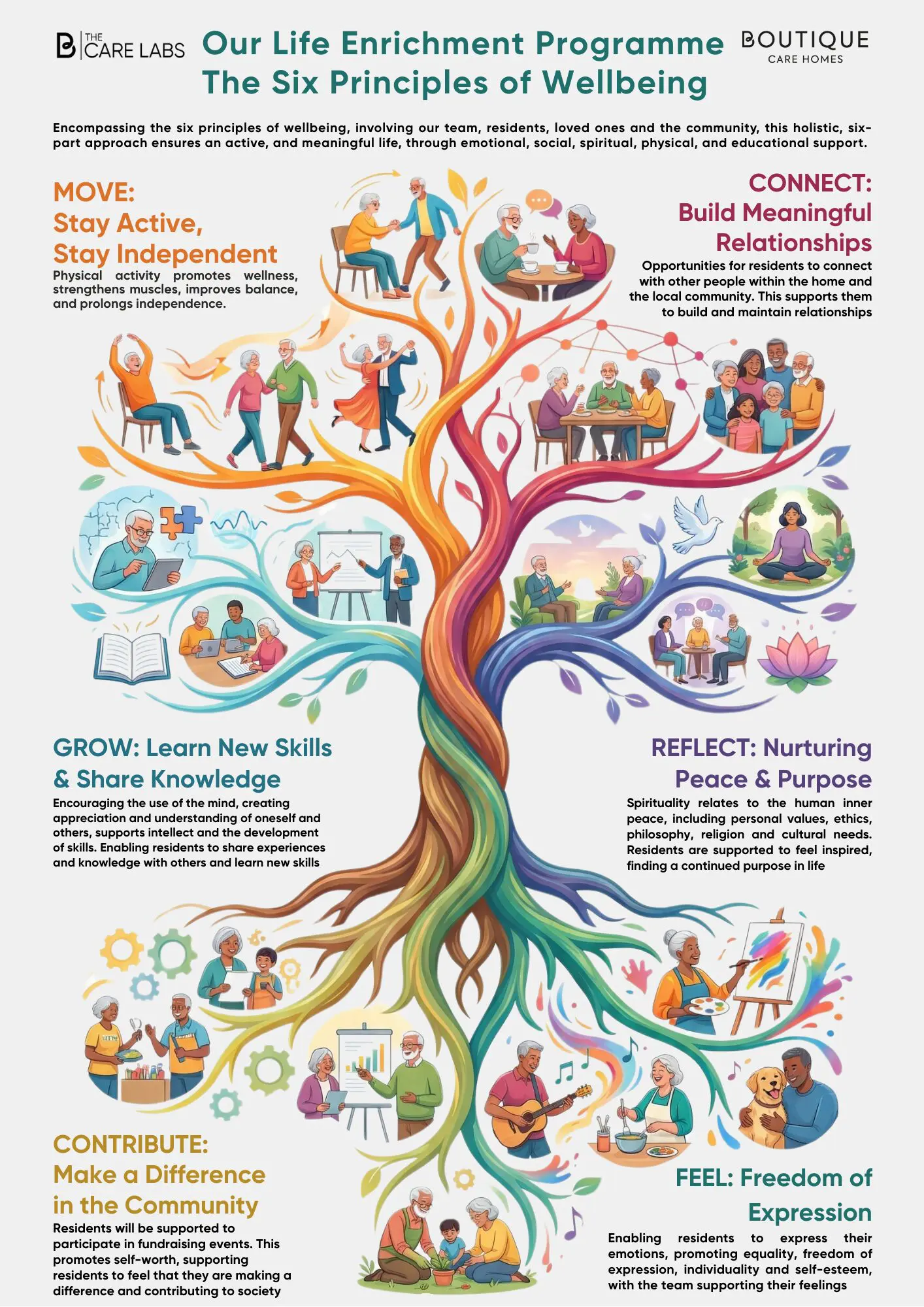
Our Life Enrichment Programme The Six Principles of Wellbeing
 Read More